Europe’s new climate reality

What the Integrated Framework for Climate Resilience means for businesses and investors
While the global political mood means there is now less emphasis on environmental measures than there has been, particularly in the light of the reality of the tightening economic position, no one has told nature to stop changing. And that change is the basis for the European Commission’s new framework for climate resilience, published at the end of October 2026, which marks a significant shift in climate policy.
The aim of achieving climate neutrality by 2050 remains. However, the new framework, for the first time, acknowledges that mitigation alone is no longer enough. Europe must also prepare to adapt to the physical impacts of our changing climate, particularly since the effects are expected to intensify over the coming years and decades.
The European Integrated Framework for Climate Resilience assumes a 3°C increase in global temperatures by 2100 as the foundation for climate risk assessment, adaptation planning, investment decisions and resilience measures.
Why should companies care
The Integrated Framework for Climate Resilience sends a clear message: adaptation and resilience must now sit alongside mitigation as strategic priorities. Climate resilience is no longer just a sustainability issue; it is a core component of enterprise risk management and long-term value protection.
As well as planning for a net-zero future, businesses are being asked to plan for a future when significant climate impacts are unavoidable. Organisations should not wait for detailed implementation requirements before acting. Now is the time to test resilience against more severe climate scenarios and strengthen adaptation plans.
Forward-looking companies should review:
- Climate scenario analysis methodologies
- Physical risk assessments
- Asset exposure mapping
- Supply chain resilience programmes
- Business continuity planning
- Water security assessments
- Adaptation and resilience investment strategies
- Board oversight of climate-related risks
At Leidar, we assist organisations to prepare early and be well-positioned to protect assets, maintain competitiveness and build long-term resilience in an increasingly uncertain climate future.
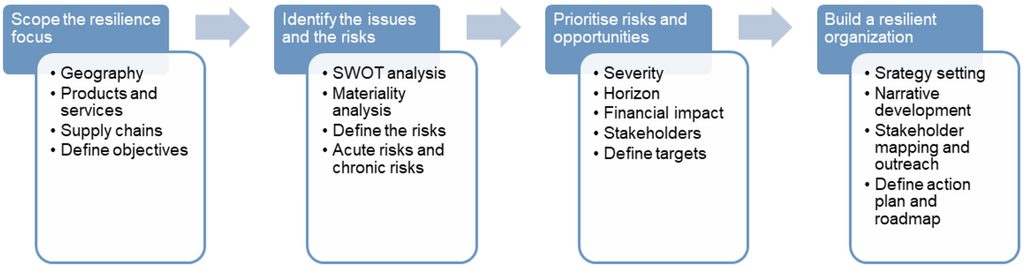
As a first step, our team of senior advisors will work with clients to complete an extensive adaptation readiness check. Combining our unique and deep expertise across several fields, we will be able to guide a client through a set of exercises that will provide a 360-degree view of the adaptation challenges and risks, as well as the strategic opportunities.
Following the analysis phase, we will then work with clients to turn the analysis of the issues, the risks and the opportunities into a series of deliverables that can be actioned immediately.
Why the Integrated Framework for Climate Resilience was developed
Climate impacts are already causing substantial economic and social costs across Europe, and indeed the world. Recent years have seen increasingly severe heatwaves, droughts, wildfires, flooding and water stress. Temperatures approached 50°C in southern Europe in the summer of 2026. This, and the myriad other events, are negatively affecting communities, critical infrastructure, agriculture, industry and natural ecosystems.
The Commission’s position is that Europe must move beyond just responding to emergencies. Instead, we need a systematic resilience strategy embedded in public policy and corporate decision-making.
The policy architecture
At the heart of the Framework is the principle of “climate resilience by design”. It states that climate risks must be integrated into all policy development, infrastructure planning, investment decisions and operational management. It is no longer simply a separate environmental issue.
The Framework also introduces designated “risk owners”, who are the responsible actors for major climate-related risks across critical sectors and systems. This is intended to avoid situations in which significant climate risks fall between institutional responsibilities.
In addition, Member States will be expected to develop strategic climate resilience plans, conducting national climate risk assessments and aligning national adaptation efforts with broader European objectives.
The Framework is supported by a suite of resilience tools, including the Commission’s planned climate risk assessment platforms, adaptation solution databases and knowledge-sharing mechanisms intended to support national and regional governments, as well as the business and investor communities.
The focus is on interconnected physical climate risks that are increasingly affecting Europe, including:
- Extreme heat and heat-related mortality
- Prolonged droughts and water scarcity
- Wildfires
- Riverine and coastal flooding
- Damage to critical infrastructure
- Disruption of energy systems
- Supply chain disruption
- Rising economic losses associated with climate-related disasters
- Impacts on food production and agriculture
The objective is to manage climate risk as a systemic challenge rather than as a series of isolated hazards.
What governments are required to do
National governments and public authorities will play a central role in implementing the Framework. Their responsibilities include:
- Conducting climate risk assessments, using the new common EU climate reference scenario
- Developing national climate resilience strategies and plans
- Assigning responsibility for major climate risks
- Incorporating resilience considerations into public investment decisions
- Strengthening regional and local adaptation capabilities
- Supporting preparedness and emergency management systems
For many Member States, this will require significantly deeper integration of climate resilience considerations into infrastructure, land-use planning and public finance processes.
Implications for infrastructure owners
Owners and operators of critical infrastructure are among the groups most directly affected by the new Framework.
Assets such as energy networks, water systems, telecommunications infrastructure, transportation networks, data centres and healthcare facilities will increasingly be expected to assess and manage long-term climate risks.
The resilience by design principle also implies that future infrastructure investments will need to be designed to remain operational under the new, more challenging climate conditions.
Expectations for businesses, insurers and investors
Businesses will increasingly be expected to identify and manage physical climate risks affecting operations, supply chains, facilities, workforce safety and strategic planning.
The Commission has highlighted the need to mobilise both public and private resilience finance, with the aim of encouraging innovation in resilience-related products, services and solutions. Investors and lenders will need to better understand climate-related vulnerabilities within their portfolios, while insurers will face growing pressure to address widening insurance protection gaps associated with escalating climate losses.
What this means for corporate climate reporting
Many companies already publish climate-related reporting through the EU’s Corporate Sustainability Reporting Directive (CSRD), using the European Sustainability Reporting Standards (ESRS). The new Framework does not replace these requirements. Instead, it is likely to strengthen reporting expectations around physical climate risk assessment, resilience planning and adaptation disclosures.
Under CSRD and ESRS, companies are already required to assess material climate risks and opportunities, including physical climate risks and their impact on strategy, business models and financial performance. The major difference is the adoption of the 3°C climate reference scenario, codifying the level of climate stress organisations need to consider in their risk assessments and scenario analyses.
Act now
As well as planning for a net-zero future, businesses and investors are being asked to plan for a future when significant climate impacts are unavoidable. Organisations should not wait for detailed implementation requirements before acting. Now is the time to test resilience against more severe climate scenarios and strengthen adaptation plans.
- European Commission, Protecting Europe with stronger climate-resilience, published 27 October 2026.
- European Commission, EU Adaptation Strategy.
- European Parliamentary Research Service (EPRS), European integrated framework for climate resilience, September 2026.
- European Commission, Climate Adaptation and Resilience policy materials.
About Leidar
Leidar is an international leadership and corporate affairs consultancy, headquartered in Geneva with offices in Brussels, London, Oslo, Washington, New York, Singapore and Dubai. Leidar supports organisations in defining their strategic direction, managing complex issues, and mastering their communications and engagement needs. The firm works across sectors including energy, public health, aviation, shipping, and sustainability.
For more information, please contact
Peter de Graaf
Senior Advisor, ESG and Sustainability based in London
Peter heads up the sustainability reporting work for Leidar and works across the offices in Geneva, Brussels and London. He has been involved in sustainability throughout a career that includes regulatory affairs, management consultancy and finance.