A shift to adaptation: building a resilient enterprise model
Resilience is the new competitive advantage
The dominant logic of business has always been efficiency. Successful businesses have optimized for scale, cost and speed, and built global supply chains underpinned by stability, predictability and integration.
But this focus on efficiency is now increasingly challenged by global disruptions, often happening simultaneously:
Geopolitical crises that disrupt the world’s economic and social fabric

Trade regimes that are increasingly political
National competition that is reshaping industrial policy
Technological rivalries where advances in data and AI are becoming strategic resources
Underpinning all these short- to medium-term factors are long-term climate change and nature loss, creating irrevocable change that affects real assets. In this context, business efficiency by itself is no longer sufficient to protect business performance. It needs to be underpinned by business resilience.
Successful companies need a structured and strategic approach to adaptation. Resilience is becoming a competitive advantage and increasingly sitting at the core of strategy.
Understanding the implications of the AI revolution
The AI revolution is often described as a software breakthrough, a productivity revolution, or as the arrival of a new generation of intelligent systems. Yet framing it primarily through the lens of technology risks obscures the deeper transformation underway.
A better way to understand the AI transition is through three interconnected pillars:

Physical foundations – how we satisfy the need for energy, water, land, minerals, chips and infrastructure

Sovereignty and governance – how countries balance openness, regulation, resilience and strategic autonomy

Geopolitics and inclusion – whether AI deepens global inequality or creates pathways for broader participation and development.
Understanding the strategic implications of the AI revolution
Together, these three dimensions form the strategic triangle that will shape the next phase of the global economy. The AI transition is not merely a technology revolution. And like previous industrial transitions, its long-term winners are unlikely to be determined solely by technological sophistication.
They will be shaped by the ability to align infrastructure, institutions, legitimacy and inclusion into a coherent societal model capable of sustaining transformation over time.
The three levels of adaptation
Defensive adaptation protects an organization against shocks. Risk management adapts incrementally and contingency plans improve, but they do not address the underlying need for structural change. Organizations that remain at this level feel they are constantly firefighting, gradually losing their competitive edge.
An organization embeds resilience into its core business strategy. Adaptation is proactive by design, solutions-orientated and it takes a view covering the whole supply chain. But even here, progress often stalls as companies and institutions discover that the real barrier to adaptation is not intent. Instead, it is fragmentation across functions, geographies and partners.
The third level is where the required adaptation truly begins. Organizations take action beyond the limits of their own business activities, helping shape the environment in which they operate. They set relevant standards jointly with peers, invest in shared infrastructure, collaborate pre-competitively and across sectors, and work with governments and other stakeholders to jointly develop and implement sustainable outcomes.
From strategy to narrative to action
Many organizations struggle with this fundamental challenge. Resilience is still framed as defense. Adaptation is still seen as cost. Transparency is still considered a risk. And systemic adaptation is a long way off for many.
At Leidar, we assist organizations turn disruption into resilience, and resilience into strategic trust.Companies must adapt to climate and geopolitics, but now also to the convergence of AI, resource constraints, data sovereignty and social legitimacy. The winners will be those that can explain, organize and act around this new reality before it defines them.
Resilience and adaptation narrative lab
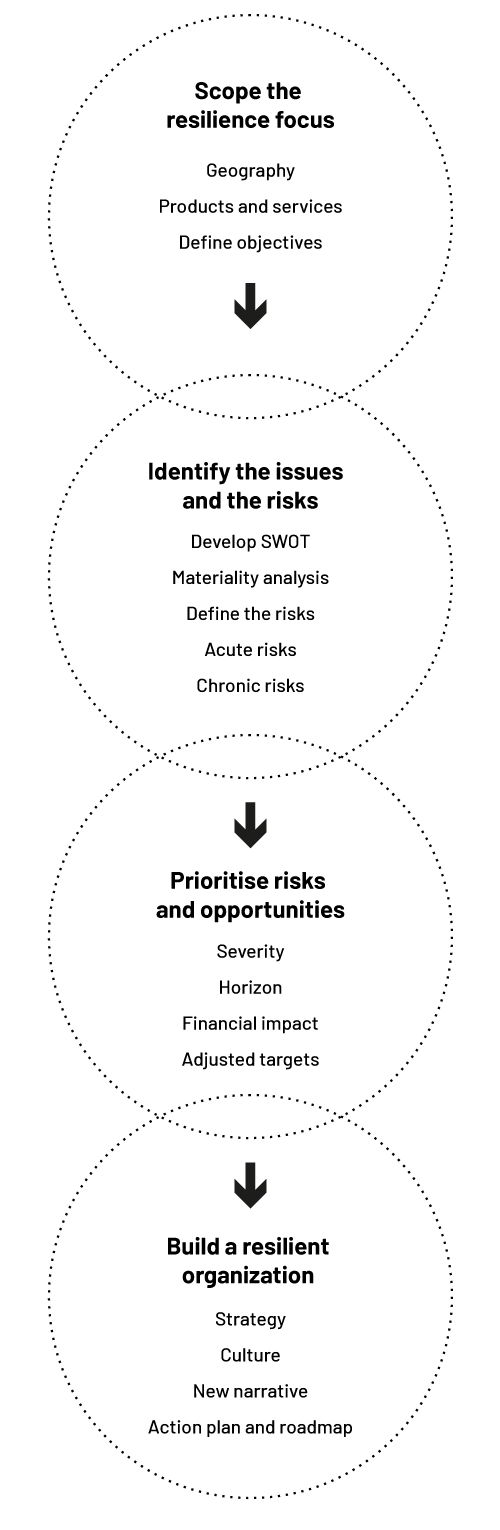
We offer an advisory senior process for companies facing systemic disruption, helping leadership teams answer:
- What are the external forces impacting our licence to operate?
- Where are we exposed across AI, climate, energy, water, data and geopolitics?
- What do we need to control, where do we share and collaborate?
- How do we turn resilience from risk management into a strategic advantage?
- What narrative can align investors, employees, policymakers and partners?
- How does company culture need to evolve to make adaptation real?
When these questions are addressed strategically and openly, organizations typically discover that the path forward is clearer than expected. In this environment, leadership is about developing a clear narrative and creating the conditions in which better decisions become possible.
Get our methodology to building a resilient enterprise model
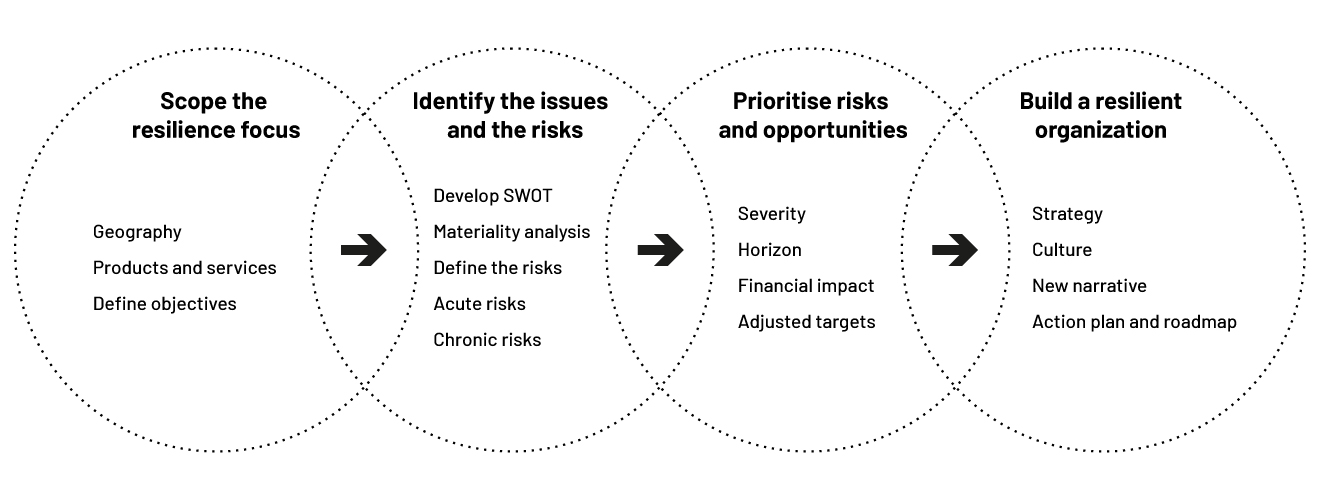
Why Leidar?
Our methodology is proven yet adaptable. We partner directly with leadership teams, tailoring every step to your culture and level of preparedness. In an active incident, we work alongside the nation’s top cybersecurity and privacy law firms to mitigate risks and protect your organization from legal, regulatory, and reputational fallout. From readiness planning to real-time response, Leidar ensures you’re equipped to safeguard your people, your brand, and your reputation when it matters most.
Our team of senior advisors combines unique and deep expertise across several fields to provide support and advise on actionable solutions for our clients:
- strategy and narrative development
- geopolitics and food security
- policy and regulatory challenges
- intelligence, defence and security
- technology and AI
- ocean conservation, nature and biodiversity
- sustainability strategy and reporting
- transition financing, insurance and securitisation.